Velorix
Choosing an AI computing server manufacturer is no longer a simple hardware decision. Global buyers must examine performance, reliability, support, and long-term operating costs.
A modern server may combine NVIDIA GPUs, AMD processors, high-speed networking, and liquid cooling. These components affect training speed, energy use, and maintenance demands. A strong manufacturer should provide verified benchmarks, clear warranty terms, and practical deployment guidance. Factory testing matters too. Buyers should ask how systems perform under sustained workloads, not only short demonstrations.
This guide reviews seven leading AI computing server manufacturers for international buyers. The selection considers product quality, GPU compatibility, scalability, supply capacity, technical support, and regional service coverage. It also considers whether each supplier supports research labs, cloud providers, enterprises, or industrial users. Those needs are not identical.
Real-world experience can reveal details that brochures often miss. A server may deliver excellent results in a cool test room but require stronger airflow in a crowded data center. Firmware updates, replacement parts, and remote troubleshooting can influence total ownership costs. Small details matter.
No ranking is perfect. Pricing, delivery times, and component availability change across countries and business cycles. Some manufacturers also publish limited performance information. Buyers should verify specifications independently before signing contracts. This article offers a practical comparison, not a substitute for technical testing or professional procurement advice. The right AI computing server manufacturer should match the buyer’s workload, facility, budget, and growth plan. Performance alone is never enough.
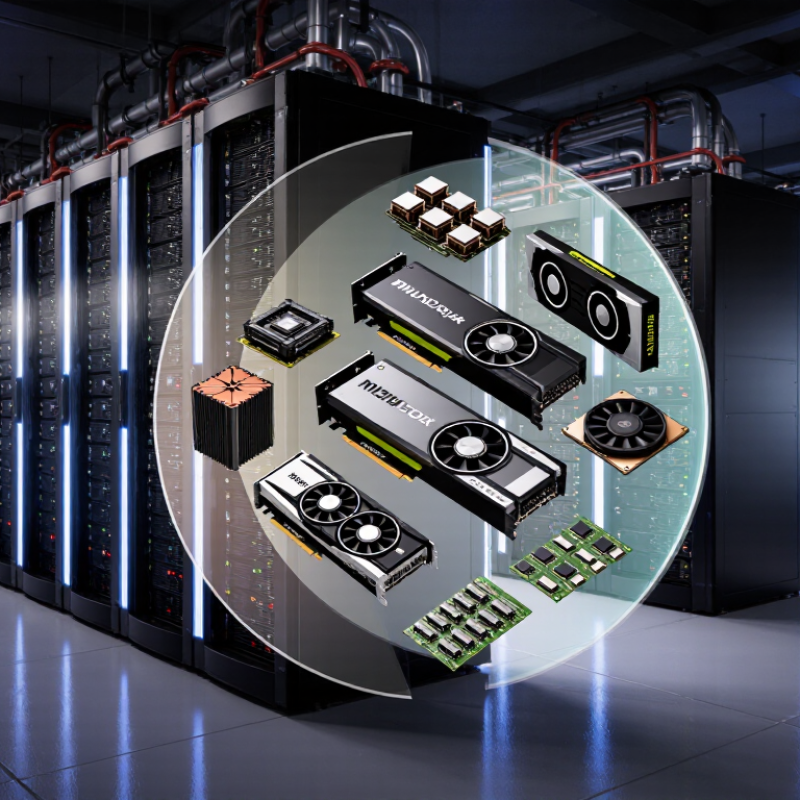
A leading AI computing server manufacturer is defined by more than processor speed. It must deliver validated performance under sustained workloads, not short benchmark bursts. IDC reported that global spending on AI infrastructure reached about $154 billion in 2024. This growth increases pressure on manufacturers to prove reliability, compatibility, and supply continuity. Buyers should examine independent benchmark results, thermal testing, firmware controls, and documented failure rates.
Thermal engineering is equally important. High-density accelerators can produce extreme heat inside a single rack. The International Energy Agency estimated that data centers consumed roughly 415 terawatt-hours of electricity in 2024. Efficient liquid cooling, airflow design, power monitoring, and workload-aware controls can reduce operational waste. The best manufacturers also support open management standards, replaceable components, and clear service procedures. Small details matter. A blocked airflow path can undermine expensive hardware.
Reliability must continue after installation. Uptime Institute’s 2024 survey found that more than half of respondents experienced a data-center outage during the previous three years. A serious manufacturer therefore provides diagnostic tools, spare-parts planning, security updates, and trained regional support. Certifications help, but they are not proof of every real-world outcome. No scorecard is perfect. Buyers should test sample systems, question optimistic efficiency claims, and compare warranty terms carefully. Practical experience often reveals weaknesses that product brochures hide.
Choosing an AI computing server manufacturer requires more than comparing processor counts. Global buyers should examine GPU compatibility, memory bandwidth, storage speed, and high-speed networking. These components directly affect model training time and inference stability. Ask for benchmark results using workloads similar to your own.
A dependable manufacturer should provide clear thermal specifications, power estimates, firmware practices, and warranty terms. Check whether the supplier supports remote diagnostics and replacement parts in your region. Certifications and documented quality procedures can indicate stronger operational discipline. Still, paperwork is not proof. Request customer references, test reports, and a live demonstration when possible. A spreadsheet can mislead if it ignores cooling costs, rack space, and electricity limits. I have seen impressive systems perform poorly after deployment because airflow planning was overlooked.
Tips: Compare total ownership cost over three years, not only the purchase price. Test mixed workloads before signing a large order. Confirm delivery timelines and spare-part availability in writing. Ask how the manufacturer handles failed GPUs, outdated drivers, and urgent technical support. Leave room for uncertainty; performance claims may change across software versions. A careful buyer should also review data-center compatibility, regional service capacity, and secure supply-chain practices before approving the final configuration.
This weighted evaluation framework reflects the main criteria global buyers typically use when comparing AI server manufacturers. GPU and accelerator performance receive the highest weight, followed by scalability, power and cooling efficiency, networking, software compatibility, reliability, and worldwide service capability. The combined weighting equals 100 points.
Global buyers often compare seven types of AI computing server manufacturers rather than chasing familiar names. The first focuses on dense GPU platforms for model training. Another builds liquid-cooled systems for research centers with limited floor space. A third specializes in inference servers, where response time matters more than raw training capacity. These manufacturers usually publish thermal data, power requirements, and accelerator compatibility. That documentation reveals more than promotional claims.
A fourth manufacturer serves universities and laboratories with flexible, upgradeable chassis. A fifth develops high-density rack systems for cloud operators handling thousands of workloads. Another concentrates on edge AI servers, using compact designs for factories, hospitals, and transport networks. The seventh provides customized platforms, matching processors, memory, storage, and networking to a buyer’s workload.
Custom work sounds attractive. It can also create longer delivery times and harder maintenance.
Practical evaluation requires hands-on testing, not only specification sheets. Buyers should request noise measurements, sustained-performance results, warranty terms, and replacement procedures. Check whether local engineers can diagnose failed power supplies or cooling pumps. A server that performs well for twenty minutes may throttle during a twelve-hour training run. That detail is easy to miss. Energy costs also deserve careful calculation, especially in regions with unstable electricity pricing. Some manufacturers offer impressive peak performance but provide limited service coverage outside their home markets. Independent validation helps, although even benchmark results may not match real workloads. The right choice depends on software support, facility design, staff expertise, and long-term operating discipline.
For global buyers, an AI server manufacturer should be judged beyond accelerator count. Hardware balance matters. High-memory accelerators, fast interconnects, NVMe storage, and reliable power delivery reduce training bottlenecks. Cooling design matters too. A dense rack can exceed 30 kilowatts, making airflow and liquid-cooling planning essential. The Stanford AI Index 2024 estimated training costs near 78 million dollars for one advanced model and 191 million dollars for another. Small efficiency gains can therefore protect serious budgets.
Software support separates usable systems from expensive equipment. Buyers should verify framework compatibility, driver stability, container tools, monitoring, and multi-node scheduling. The MLPerf benchmark offers useful performance evidence, but benchmark speed does not equal production value. Real workloads include failed jobs, changing models, and uneven data pipelines. I have seen impressive specifications become less useful when software updates arrived slowly. That risk deserves direct testing before purchase.
Global support is less visible, yet equally important. The Uptime Institute’s 2024 survey reported that many data-center outages still caused losses above 100,000 dollars. Manufacturers should provide regional spare parts, trained service engineers, clear escalation paths, and support across time zones. Ask for guaranteed response times, repair procedures, firmware policies, and security documentation. Language access helps. So does honest communication. A manufacturer that admits compatibility limits may be more reliable than one promising universal performance. Independent workload trials, reference checks, and total-cost analysis should guide the final shortlist.
| Profile | AI Hardware Capability | CPU, Memory, and Expansion | Accelerator and Interconnect Support | Software and Management Stack | Validation and Deployment | Global Support Model | Best-Fit Buyer |
|---|---|---|---|---|---|---|---|
| Profile 1 |
1U–8U systems
Air or liquid cooling Designed for dense AI training and inference clusters. |
Dual-socket server designs with DDR5 memory, high-speed PCIe expansion, and optional local NVMe storage. | Supports multi-accelerator configurations, PCIe Gen5 connectivity, and high-bandwidth cluster networking. | Linux-based deployment, remote management controller, firmware lifecycle tools, container support, and cluster monitoring integration. | Suitable for model training, fine-tuning, batch inference, and virtualized AI workloads. Rack integration is commonly available. | Regional distributors, standard warranty options, remote diagnosis, and paid on-site service in major markets. | Research institutions and mid-sized enterprise data centers. |
| Profile 2 |
2U–6U systems
High-density design Optimized for scalable accelerator clusters and demanding inference workloads. |
High-core-count server processors, large DDR5 capacity, multiple PCIe slots, and front-access serviceability. | Multi-accelerator support with PCIe or accelerator fabric options; compatible with 100/200/400GbE-class networking depending on configuration. | Hardware monitoring, Redfish-compatible management, Linux distributions, container runtimes, and orchestration-platform compatibility. | Strong fit for private AI clouds, inference farms, and distributed training environments requiring repeatable configurations. | Multi-country sales coverage, spare-parts programs, remote support portals, and optional four-hour or next-business-day service. | Cloud service providers and AI-as-a-service operators. |
| Profile 3 |
1U–4U systems
Energy-conscious options Focused on balanced compute density, power efficiency, and manageable operating costs. |
Single- or dual-socket platforms with DDR5 memory, NVMe boot storage, and flexible network adapter choices. | Supports one to several accelerators per node, PCIe Gen4 or Gen5 expansion, and standard data-center networking. | Open-source Linux support, IPMI or Redfish management, firmware utilities, automated provisioning, and standard container tooling. | Appropriate for inference, computer vision, recommendation systems, and smaller-scale model development. | Broad channel availability, regional technical support, depot repair, and configurable warranty extensions. | Cost-sensitive enterprises and universities. |
| Profile 4 |
4U–10U systems
Liquid-cooling ready Built for high thermal loads and sustained accelerator utilization. |
Dual-socket compute nodes, high-capacity DDR5 memory, hot-swappable storage, and redundant power supplies. | Supports high-end accelerator modules, direct liquid cooling options, high-speed fabric adapters, and cluster-scale expansion. | BIOS and firmware tuning, telemetry APIs, power monitoring, accelerator health checks, and integration with cluster schedulers. | Best suited to large language model training, scientific computing, digital twins, and high-performance analytics. | Project-based deployment, data-center engineering assistance, global escalation processes, and on-site commissioning options. | National laboratories, large enterprises, and HPC centers. |
| Profile 5 |
Edge and compact servers
2U–4U options Designed for locations where space, latency, and local processing are priorities. |
Compact single- or dual-socket designs, ECC memory, ruggedized options, and short-depth chassis choices. | Supports low- and mid-power accelerators, PCIe expansion, 10/25/100GbE networking, and selected industrial I/O. | Linux and virtualization support, remote fleet management, secure boot options, device telemetry, and edge orchestration compatibility. | Suitable for manufacturing, retail analytics, telecommunications, robotics, and remote inference deployments. | Local integrator support, replacement-unit programs, extended operating-temperature options, and field-service availability by region. | Industrial and distributed edge-computing buyers. |
| Profile 6 |
Modular rack systems
Cluster-oriented Emphasizes standardized nodes and repeatable large-scale deployments. |
Homogeneous compute nodes with large memory capacity, redundant storage, high-speed backplanes, and centralized rack power design. | Multi-node accelerator scaling, dedicated fabric networking, high-radix switching options, and topology-aware cluster design. | Provisioning automation, scheduler integration, fleet inventory, telemetry dashboards, image management, and API-based administration. | Strong fit for large training clusters, centralized inference, simulation, and organizations requiring predictable expansion. | Global account management, architecture consulting, deployment services, proactive monitoring, and multi-year support contracts. | Hyperscale, managed-service, and multinational buyers. |
| Profile 7 |
Configurable platforms
Broad product range Offers flexible combinations for general-purpose and AI-focused data-center workloads. |
Single- and dual-socket systems, scalable DDR5 memory, mixed NVMe/SAS storage, and multiple chassis form factors. | Supports a broad selection of accelerator classes, standard PCIe expansion, and Ethernet-based cluster connectivity. | Linux, Windows Server, virtualization, Redfish management, secure firmware updates, and common monitoring platforms. | Appropriate for enterprise pilots, departmental AI, business intelligence, and mixed virtualization environments. | Extensive reseller networks, standardized service packages, documented spare-parts processes, and multilingual support resources. | Global enterprises seeking procurement flexibility and long-term serviceability. |
Choosing an AI server manufacturer requires more than comparing processor counts. Global buyers should match the platform to real workloads, such as model training, inference, or scientific simulation. Ask for tested configurations, not broad performance claims. Request benchmark results using similar datasets, batch sizes, and software frameworks.
Hardware details matter in daily operation. Check accelerator compatibility, memory capacity, storage speed, and high-bandwidth networking. Review power requirements carefully, especially for overseas data centers with different electrical standards. Cooling design deserves equal attention. A dense server may perform well in a laboratory but struggle in a hot, crowded rack. That difference can become expensive.
Reliability depends on more than the machine itself. Evaluate manufacturing quality controls, warranty terms, spare-part availability, remote diagnostics, and response times across your region. Confirm certifications required by the destination market. Ask whether technical support can troubleshoot firmware, drivers, and operating-system issues. Procurement teams should also inspect delivery records and factory testing procedures. A low price can hide integration work, import delays, or limited support.
Perfect comparisons are rare. A benchmark may not reflect your production workload. I would run a paid pilot before approving a large order, although budgets sometimes resist this step. Document failure rates, noise levels, energy use, and setup time during testing. Leave room for honest doubt. A manufacturer that explains limitations clearly may be safer than one promising effortless performance.
It proves sustained performance, thermal stability, compatibility, and supply continuity. Short benchmark bursts can mislead. Ask for failure data and test a sample system.
Dense racks can exceed 30 kilowatts. Liquid cooling, airflow planning, and power monitoring help control heat and waste. Small details matter.
Compare accelerator memory, interconnect speed, NVMe storage, and power delivery. Balanced hardware reduces training bottlenecks. More accelerators alone may not improve production work.
Check framework compatibility, driver stability, container tools, monitoring, and multi-node scheduling. Test software updates with real workloads. Impressive specifications can become less useful when support arrives slowly.
Use independent benchmarks and workload trials. Include failed jobs, changing models, and uneven data pipelines. Benchmark speed is not production value. I would question optimistic claims.
Expect regional spare parts, trained engineers, time-zone coverage, and clear escalation paths. Ask about response times, repairs, firmware policies, and security updates. Language access helps.
Efficient liquid cooling, airflow controls, and workload-aware power management can reduce waste. A small efficiency gain can protect a large budget. Results vary.
Request diagnostic tools, documented failure rates, thermal tests, replacement plans, and warranty terms. Certifications help, but they cannot prove every real-world outcome. Test before trusting.
Compare total cost, independent trials, reference checks, compatibility limits, and service commitments. An honest manufacturer admitting limits may be more dependable than universal claims. Brochures hide weaknesses.
Choosing the right ai computing server manufacturer is essential for organizations seeking reliable, scalable, and efficient AI infrastructure. A leading manufacturer should demonstrate strong capabilities in GPU and CPU integration, high-speed networking, thermal management, energy efficiency, system stability, and flexible configurations for training, inference, and data-intensive workloads. Buyers should also evaluate product quality, customization options, lifecycle management, security features, technical expertise, and compliance with relevant regional requirements.
This overview introduces seven notable categories of manufacturers and compares their hardware performance, software compatibility, deployment tools, warranty policies, and global support capabilities. It also explains how international buyers can assess total cost of ownership, delivery capacity, maintenance responsiveness, spare-parts availability, and long-term upgrade potential. By balancing computing performance with service quality, ecosystem compatibility, and business needs, organizations can select an AI server partner that supports dependable operations and future growth across different markets.
