Choosing the best ai training server manufacturer requires more than comparing processor counts. It demands a close look at cooling design, GPU availability, networking, firmware support, and long-term service. A server may look powerful on paper, yet perform poorly when heat, power limits, or software compatibility become real problems.
NVIDIA founder and CEO Jensen Huang said, “The next industrial revolution has begun.” His statement reflects the growing importance of accelerated computing in research, manufacturing, healthcare, and business. However, not every manufacturer delivers the same practical value. The strongest suppliers combine high-density GPU systems with stable drivers, efficient liquid or air cooling, and responsive technical support. They also explain limitations clearly.
This guide examines leading manufacturers through measurable criteria. It considers GPU architecture, memory capacity, interconnect speed, rack design, energy use, deployment experience, and warranty coverage. Installation details matter. A noisy server room, restricted power supply, or delayed replacement part can weaken an otherwise impressive system.
There is no universal winner.
The right ai training server manufacturer depends on model size, budget, facility conditions, and future expansion plans. Some buyers need compact workstations for experimentation. Others require multi-node clusters with InfiniBand networking and advanced monitoring. Price alone can mislead. A lower purchase cost may create higher cooling and maintenance expenses later.
This comparison also recognizes uncertainty. Vendor specifications can change quickly, and independent performance results may not match every workload. Readers should verify current configurations, service terms, and regional availability before purchasing. That cautious step is easy to overlook, but it often separates a dependable AI deployment from an expensive disappointment.
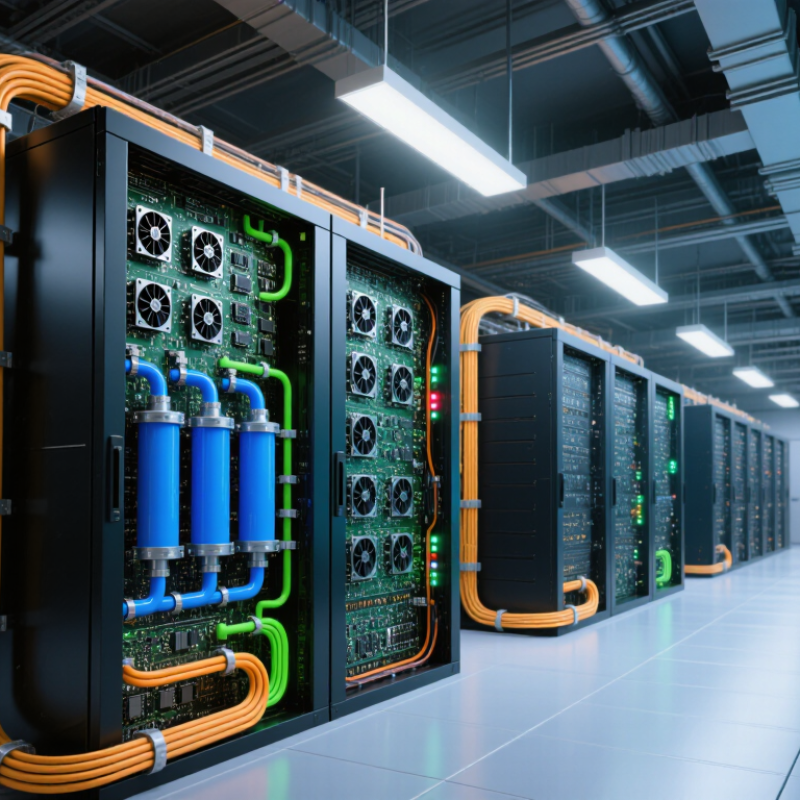
What Defines a Leading China AI Training Server Manufacturer?
A leading China AI training server manufacturer is defined by engineering depth, not a polished product page. Its servers should handle dense accelerator configurations, high-speed interconnects, and sustained workloads without unstable performance. Engineers need to test real training jobs, not only short benchmark runs. Thermal logs matter. So do power measurements.
In a practical data center, airflow can change when a rack reaches full capacity. A reliable manufacturer plans for this detail with efficient heat sinks, liquid-cooling options, and clear maintenance access. It should provide burn-in testing, firmware control, component traceability, and documented quality procedures. These details help operators diagnose failures before they interrupt expensive training cycles. Strong technical support also matters, especially during deployment and system upgrades.
No manufacturer gets every design decision right. Cooling assumptions can fail in older facilities, and delivery schedules may shift when specialized components are limited. A trustworthy supplier acknowledges these risks and offers realistic alternatives. It should explain performance limits, warranty conditions, energy demands, and compatibility requirements without hiding difficult information. Engineers with field experience can recommend rack layouts, network settings, and spare-part plans based on measured conditions. That practical honesty often defines leadership more clearly than peak computing figures.
Key Technologies Behind China’s AI Training Server Systems
Who Is the Best China AI Training Server Manufacturer?
Selecting the best China AI training server manufacturer requires more than comparing processor counts. Strong systems combine high-bandwidth accelerators, fast interconnects, and balanced memory capacity. In practice, I inspect how quickly a server moves data between GPUs, CPUs, and storage. A narrow data path can leave expensive accelerators waiting. That waste appears as idle fans and disappointing training time. Thermal design matters too. Efficient airflow, liquid cooling options, and stable power delivery protect performance during long workloads. Hardware claims need testing.
Tips:
Ask for measured results from workloads similar to yours. Check sustained throughput, not a short benchmark peak. Request rack-level noise, power, and temperature data. Confirm firmware update procedures and spare-part access. A useful supplier should explain failure handling clearly. I also test scaling across several nodes. Small network delays can become large training losses. This step is often skipped.
Reliable manufacturers usually document BIOS settings, driver compatibility, security controls, and service response times. Their engineers should understand distributed training, container environments, and checkpoint recovery. A strong technical team can diagnose whether slow training comes from communication, memory pressure, or storage latency. I would still avoid trusting polished demonstrations alone. Some results depend on carefully tuned models. Real deployments are messier. Evaluation should include mixed workloads, restart tests, and weeks of monitoring. One weakness remains easy to miss: a server may be powerful, yet difficult to maintain locally.
Major Manufacturers and Their Product Strengths
China’s AI server market includes several major manufacturer groups, each with distinct product strengths. Large enterprise vendors often deliver 8-GPU servers, strong supply chains, and broad maintenance coverage. Their platforms suit universities, cloud providers, and public-sector research centers.
Specialist manufacturers focus on dense computing, liquid cooling, and flexible customization. Some systems support high-speed GPU interconnects, while others prioritize energy efficiency in compact racks. In real deployments, engineers should inspect airflow, power limits, firmware stability, and replacement procedures. A powerful specification can still disappoint when cables are difficult to access. That happens more often than brochures suggest.
Tips: Request workload-based testing before purchase. Measure training speed, system noise, and power consumption. Check support response times and spare-part availability. Ask for clear warranty terms and documented compatibility with your chosen accelerators. Independent validation is valuable, although it may reveal weaknesses in cooling or software integration. Procurement teams should also compare total operating cost, not only the initial server price. One overlooked detail is rack space. A dense server may require stronger power distribution and additional cooling capacity.
Who Is the Best China AI Training Server Manufacturer?
Rather than ranking companies, this vendor-neutral chart compares representative hardware capability ranges commonly found in modern AI training server configurations.
The reference ranges cover accelerator density, system memory, local NVMe storage, and high-speed network connectivity. Actual configurations vary by workload, cooling design, and deployment scale.
How to Compare China AI Training Server Manufacturers
Comparing China AI training server manufacturers requires more than checking processor counts. Start with your workload, model size, and expected training schedule. A reliable manufacturer should explain memory bandwidth, interconnect speed, cooling design, and power demands clearly. Ask for measured performance, not only laboratory projections. Numbers can mislead.
Request a complete configuration sheet before discussing price. It should list accelerators, memory, storage, network cards, power supplies, and rack dimensions. Check whether the system supports your preferred software frameworks and monitoring tools. Experienced engineers should provide deployment guidance and troubleshooting procedures. Response time matters when several servers run continuously. Test under pressure.
Examine factory quality controls, burn-in testing, warranty terms, and spare-part availability. Ask for anonymized customer references from similar workloads. A serious supplier can explain failure rates, repair timelines, and firmware update practices without avoiding difficult questions. Validate claims through an on-site inspection or an independent technical test. That costs time, but it reduces purchasing risk. Price remains important, yet low initial cost may hide higher electricity, maintenance, or integration expenses. My own comparison process would include a small pilot order, because written specifications rarely reveal every practical limitation. No manufacturer is perfect. The strongest choice is usually the one that documents weaknesses, communicates precisely, and improves after testing.
Selecting the Right Manufacturer for Different AI Workloads
Who Is the Best China AI Training Server Manufacturer?
Selecting the right manufacturer depends on the workload, not only the server’s GPU count.
Large language model training needs dense GPU layouts, fast interconnects, strong power delivery, and high-bandwidth memory. A small bottleneck can waste expensive training hours. Ask for measured performance under sustained loads, not short benchmark results.
Computer vision projects often need balanced GPU capacity, storage speed, and reliable data pipelines.
Fine-tuning workloads may benefit from flexible configurations and lower operating costs. Inference servers require predictable response times, efficient cooling, and stable remote management. During evaluations, I check airflow design, rack compatibility, firmware controls, and noise levels. Practical details matter.
A capable Chinese manufacturer should provide factory testing, component traceability, documented thermal results, and responsive technical support.
Request burn-in records and failure-rate data when available. Review warranty terms carefully, including replacement time and cross-border service procedures. I once focused too heavily on peak computing performance and overlooked storage expansion. That mistake made later upgrades expensive. Specifications can mislead. Independent validation, sample testing, and a clear deployment plan offer stronger evidence than impressive brochures.
Conclusion
Choosing the best China AI training server manufacturer requires more than comparing prices or hardware specifications. A leading supplier should demonstrate strong engineering capabilities, reliable supply-chain management, flexible system design, efficient thermal and power management, and dependable technical support. Key technologies include high-performance GPU or accelerator integration, fast interconnects, large memory capacity, optimized storage, intelligent monitoring, and scalable server architectures that can support demanding model training environments.
When comparing manufacturers, buyers should evaluate computing performance, system stability, compatibility with existing infrastructure, customization options, delivery capability, maintenance services, and total cost of ownership. Different AI workloads require different configurations: large language model training may prioritize accelerator density and high-speed networking, while computer vision, recommendation systems, or research applications may require balanced computing, storage, and expansion capabilities. The right ai training server manufacturer should therefore provide a tailored solution that matches workload requirements, future growth plans, operational conditions, and service expectations.
 Velorix
