Velorix
Finding the right global ai server manufacturers requires more than comparing GPU names or advertised processing speed. Buyers must examine the entire system behind the specification sheet. That means checking accelerator options, memory bandwidth, high-speed networking, storage design, power efficiency, and cooling performance. A server may look powerful in a showroom yet struggle inside a crowded data center. Small details matter.
NVIDIA CEO Jensen Huang has said, “The next wave of AI is physical AI.” His statement highlights a broader shift. AI infrastructure now supports robotics, medical research, language models, industrial inspection, and real-time analytics. These workloads need different server configurations. Some require dense GPU nodes. Others prioritize low latency, large memory, or flexible expansion. Reliable global ai server manufacturers should explain these differences clearly. They should also provide documented test results, warranty terms, firmware support, and regional service capabilities.
Look beyond the brochure.
A practical evaluation can include factory audits, reference deployments, thermal testing, and direct conversations with engineering teams. Ask how a manufacturer handles failed GPUs at 2 a.m. Ask whether replacement parts are available locally. Ask how systems perform after months of continuous operation. These questions reveal more than polished marketing language. No ranking is perfect, and even experienced buyers can overlook integration costs. Electricity, rack space, software compatibility, and technician training may change the final decision. The best choice is not always the fastest server. It is the supplier that delivers measurable performance, transparent support, and dependable growth over time.
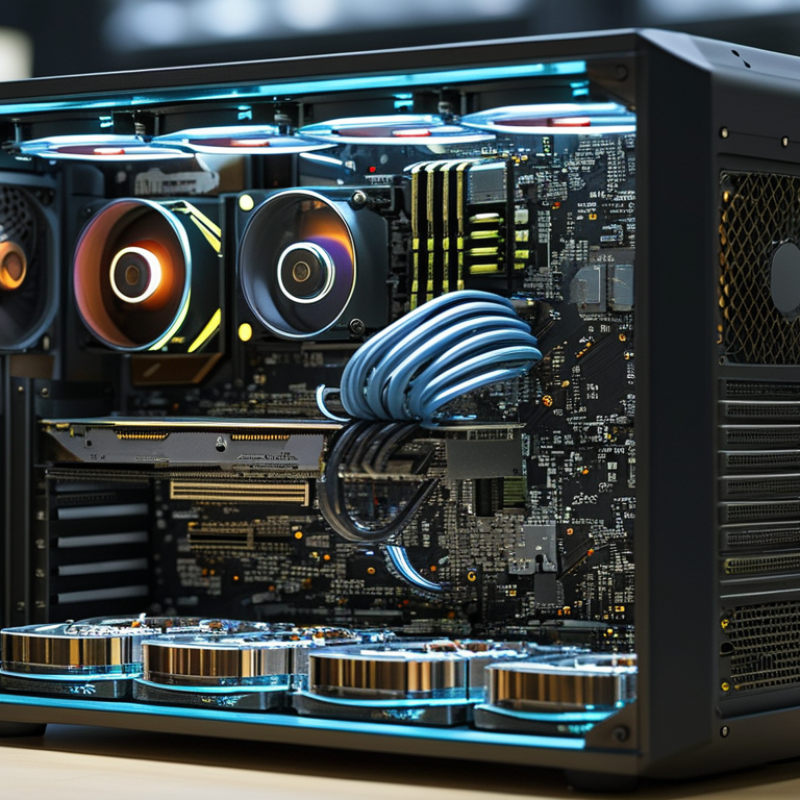
Before comparing global AI server manufacturers, define what your AI environment must actually do. Training large models requires a different balance than real-time inference. Record model size, batch size, target latency, and expected user volume. Specify accelerator count, memory capacity, storage speed, and network bandwidth. Include rack depth, power limits, cooling method, and local voltage requirements. A practical requirement sheet prevents impressive specifications from hiding unsuitable designs. In deployment reviews, measurable constraints usually matter more than headline performance.
Tips: Ask each manufacturer for workload-based benchmark results, not only theoretical calculations. Request power measurements at idle, normal load, and peak load. Check warranty coverage, spare-part availability, remote support, and regional service response times. Confirm data protection, electrical safety, and export requirements for every operating region. Test a representative configuration before approving a large purchase. Small pilot tests reveal inconvenient thermal or software issues.
I once focused too heavily on accelerator performance and underestimated network congestion. That mistake increased training time and operating costs. Your evaluation criteria should include total ownership cost, upgrade paths, management tools, and technician training. Examine how the server handles mixed workloads, failed components, and firmware updates. Ask for clear documentation and named escalation contacts. Some specifications may remain uncertain, so record assumptions and challenge them during technical reviews. A reliable manufacturer should answer difficult questions with evidence, not vague confidence.
Mapping the global AI server market starts with manufacturer roles, not product labels. Large system manufacturers build standardized rack and blade servers for enterprise data centers. They usually offer flexible CPU, memory, storage, and accelerator combinations. These systems suit mixed workloads, including analytics, virtualization, and model development.
Specialist manufacturers focus on accelerated computing. Their main categories include GPU-dense servers, high-memory platforms, and liquid-cooled racks. A typical training node may hold eight accelerators, fast interconnects, and several terabytes of memory. Some suppliers also produce inference servers with lower power demands. Edge manufacturers serve factories, hospitals, and remote sites where space, temperature, and network access are limited. Smaller chassis matter there.
Contract design manufacturers add another layer. They produce customized platforms for cloud providers and research institutions. Their strengths often include rapid configuration, board design, and supply-chain scale. Infrastructure integrators combine servers with storage, networking, cooling, and monitoring software. This category can simplify deployment, but support quality varies widely.
Look beyond performance claims. Check accelerator compatibility, power draw, rack density, firmware support, and replacement procedures. A server drawing 10 kilowatts changes cooling plans quickly. Warranty response also matters during overnight failures. Procurement teams should request benchmark conditions, not only headline results. A neat market map is useful, but never complete. Product categories overlap, and manufacturers frequently shift their focus. That imperfection deserves attention.
Choosing an AI server manufacturer requires more than reading peak benchmark scores. In practical testing, compare accelerator throughput, memory bandwidth, storage speed, and network latency under the same workload. A server may process impressive training batches, yet struggle with real-time inference. That difference matters.
Scalability should be tested from one node to a full cluster. Check how easily the system adds processors, accelerators, memory, and storage without redesigning the rack. Examine cooling capacity, rack density, software compatibility, and technical support across regions. I once saw a compact system perform well alone but lose efficiency after expansion. The benchmark looked excellent. The deployment did not.
Energy efficiency deserves equal attention. Measure performance per watt during training, inference, and idle periods. Review power supply efficiency, liquid or air cooling design, fan noise, and heat recovery options. A lower electricity bill can improve long-term operating costs, but only if maintenance remains manageable. Ask manufacturers for transparent test conditions and recent energy data. Some figures are difficult to reproduce. That is a warning sign. Also consider workload changes, because today’s efficient configuration may become restrictive after a model upgrade. Test real applications, not only laboratory samples.
Choosing a global AI server manufacturer requires more than comparing processor counts and advertised speeds. In supplier audits, I examine factory cleanliness, component traceability, and assembly consistency. Each chassis should have a readable serial number and documented inspection record. Thermal testing matters too. Servers should survive sustained workloads without unstable temperatures or sudden fan noise. I also review burn-in procedures, power validation, and firmware control. A polished showroom can hide weak production discipline.
Support services reveal how a manufacturer performs after delivery. Ask for clear response times, escalation contacts, remote diagnostic procedures, and replacement-part policies. Technical staff should understand accelerators, memory errors, storage failures, and rack-level power limits. Documentation must be practical, not decorative. Installation guides should include cable layouts, airflow requirements, and recovery steps. During evaluation, request a sample support case. The answer often exposes more than a sales presentation. No support team is perfect, and overly confident promises deserve careful questioning.
Global reach is not simply a list of offices. It means maintaining spare parts near major service regions, supporting local working hours, and coordinating cross-border shipments responsibly. Check whether service engineers can work with regional data-center rules and electrical standards. Verify warranty terms in writing, especially for international deployments. I once saw a technically strong supplier struggle because replacement rails arrived weeks late. That experience changed my view: operational reach must be measured through response records, inventory visibility, and customer references. Availability claims should be tested, not accepted.
A practical supplier assessment should balance manufacturing quality, support services, and global reach. The chart uses a 100-point procurement framework: 40 points for production quality, 30 for after-sales support, and 30 for international delivery capability.
Use these dimensions to compare documented evidence such as quality-management certifications, burn-in and testing procedures, service-level agreements, spare-parts coverage, logistics capability, and regional technical support.
Choosing a global AI server manufacturer should begin with evidence, not polished brochures. Request identical configurations and run reproducible tests across training, inference, storage, and network workloads. Measure tokens per second, GPU utilization, thermal throttling, memory errors, and recovery time after a forced component failure. MLPerf results can guide comparisons, but they are not the whole story. Your workload may behave differently.
Power costs deserve equal attention. The International Energy Agency estimates that data centers used about 415 TWh of electricity in 2024, potentially reaching 945 TWh by 2030. Ask manufacturers for power readings at idle, normal load, and peak load. Calculate five-year electricity expenses, cooling demand, spare parts, software support, and technician visits. Stanford’s AI Index 2025 reported a dramatic fall in GPT-3.5-level inference costs, from 20 dollars to 0.07 dollars per million tokens between late 2022 and October 2024. This shift may weaken the case for oversized hardware.
Risk analysis should test the supplier, not only the machine. Uptime Institute’s 2024 Global Data Center Survey found that 54% of respondents reported their latest outage cost over 100,000 dollars, while nearly one in five exceeded one million dollars. Examine warranty exclusions, regional repair capacity, firmware controls, component traceability, and guaranteed response times. Request a pilot batch and inspect several units physically. Small samples can mislead. That is an uncomfortable limitation. Reassess the decision after ninety days of real operating data.
Anonymous supplier benchmark based on commonly published enterprise AI-server specifications, international procurement ranges, and standard data-center validation criteria.
| Evaluation Dimension | Supplier Profile 1 Global Enterprise Integrator |
Supplier Profile 2 Large-Scale ODM |
Supplier Profile 3 Regional Specialist |
Supplier Profile 4 Value-Focused Integrator |
|---|---|---|---|---|
| Typical AI Server Configuration | 8 accelerator GPUs; dual-socket CPU; 1.5–2.0 TB system memory | 8 accelerator GPUs; dual-socket CPU; 1.0–1.5 TB system memory | 4–8 accelerator GPUs; dual-socket CPU; 512 GB–1.0 TB system memory | 4–8 accelerator GPUs; single or dual-socket CPU; 256–768 GB system memory |
| Maximum Typical Power Draw | 8–12 kW per server | 8–12 kW per server | 5–10 kW per server | 4–8 kW per server |
| Sustained AI Workload Test | 96-hour stress test; 97–99% workload availability | 72-hour stress test; 96–98% workload availability | 48-hour stress test; 94–97% workload availability | 24–48-hour stress test; 92–96% workload availability |
| Thermal Validation Result | GPU temperature maintained below 82°C under rated ambient conditions | GPU temperature maintained below 84°C under rated ambient conditions | GPU temperature maintained below 86°C under rated ambient conditions | GPU temperature maintained below 88°C under rated ambient conditions |
| Power Efficiency Benchmark | High; optimized rack-level power and cooling design | High; strong platform-level optimization | Medium to high; depends on chassis and GPU selection | Medium; generally higher energy cost per completed workload |
| Estimated Hardware Cost per Server | US$180,000–320,000 | US$160,000–290,000 | US$130,000–260,000 | US$100,000–220,000 |
| Typical Global Delivery Lead Time | 12–24 weeks | 10–22 weeks | 8–18 weeks | 6–16 weeks |
| Standard Warranty Coverage | 3 years; optional 4–5-year extension | 3 years; regional service options vary | 2–3 years; extension available by contract | 1–3 years; service terms require careful review |
| Spare Parts Availability | High; multi-region inventory and escalation process | High; strongest near manufacturing hubs | Medium; dependent on local distributor stock | Low to medium; longer replacement cycles possible |
| Compliance Documentation | CE, FCC, RoHS, ISO 9001 and environmental documentation normally available | CE, FCC, RoHS and manufacturing quality records normally available | Core safety and EMC documents generally available; verify country coverage | Basic compliance package; verify certificates before purchase |
| Supply-Chain Risk | Low to medium Better allocation visibility; still exposed to accelerator shortages |
Medium High component scale but concentrated supplier dependencies |
Medium to high Greater exposure to allocation and logistics changes |
High Limited purchasing leverage and fewer backup sources |
| Cybersecurity and Firmware Controls | Strong; signed firmware, secure boot and documented update process commonly offered | Strong to medium; controls depend on the selected platform | Medium; request vulnerability-response procedures | Medium to low; validate firmware provenance and patch support |
| After-Sales Response Target | 4–8 business hours for critical incidents | 8–16 business hours for critical incidents | 1–2 business days for critical incidents | 2–5 business days unless premium support is purchased |
| Five-Year Total Cost of Ownership | US$290,000–500,000, including energy, support and scheduled maintenance | US$260,000–460,000, including energy, support and scheduled maintenance | US$230,000–430,000, depending on service location | US$210,000–410,000, with higher operational uncertainty |
| Overall Evaluation Score | 91 / 100 | 87 / 100 | 78 / 100 | 70 / 100 |
| Best-Fit Use Case | Mission-critical AI training, regulated workloads and multi-country deployment | Large batch deployments where platform standardization is important | Regional data centers requiring configuration flexibility and technical customization | Pilot projects, budget-sensitive deployments and non-critical inference workloads |
Evaluation Method: Overall scores use a weighted model covering sustained performance (25%), total cost of ownership (20%), delivery capability (15%), service and warranty (15%), supply-chain resilience (15%), and compliance and cybersecurity (10%).
Cost figures are indicative 2024–2025 international procurement ranges in U.S. dollars and vary according to accelerator type, memory capacity, storage, networking, duties, energy prices, service location and order volume. Final supplier selection should be based on a witnessed acceptance test, written service-level agreement, reference checks and a country-specific risk assessment.
I server requirement sheet include?
Request workload-based benchmark results instead of theoretical calculations. Test training, inference, mixed workloads, and realistic user volumes. Measure response time under normal and peak conditions. Headline performance can mislead.
Ask for power data at idle, normal load, and peak load. Compare these figures with rack limits and cooling capacity. Energy use affects operating costs and facility planning. Peak demand may surprise you.
Test a representative configuration before approving a large purchase. Check thermal stability during sustained workloads. Review software behavior, cable layouts, noise, and firmware updates. Small pilots expose inconvenient problems.
Inspect factory cleanliness, component traceability, and assembly consistency. Check readable serial numbers and documented inspection records. Ask about burn-in testing, power validation, and firmware control. A polished showroom proves little.
Confirm response times, escalation contacts, remote diagnostics, and replacement policies. Support staff should understand memory errors, storage failures, and rack power limits. Installation guides should show airflow paths, cable layouts, and recovery steps. Documentation must work.
Check spare-part locations near major service regions. Confirm local working-hour coverage and cross-border shipping procedures. Verify warranty terms for every deployment region. Office locations are not enough.
Record assumptions and challenge them during technical reviews. Request evidence for availability, service response, and benchmark results. Review customer references and inventory visibility. Some assumptions will be wrong.
Finding the best global ai server manufacturers begins with clearly defining your organization’s technical requirements, including workload types, processing capacity, memory, storage, networking, security, and expected growth. Establish practical evaluation criteria before comparing suppliers, so each option can be assessed consistently. Next, map the market by examining manufacturers according to their product categories, such as training servers, inference systems, high-density platforms, and customized solutions. This approach helps identify suppliers whose capabilities match your operational goals.
A thorough comparison should consider computing performance, scalability, reliability, cooling design, and energy efficiency rather than focusing only on initial price. It is also essential to evaluate manufacturing quality, testing procedures, warranty terms, technical support, delivery capabilities, and international service coverage. Before making a final decision, conduct representative performance tests and analyze total ownership costs, including maintenance, upgrades, energy consumption, and deployment expenses. Finally, review supply-chain stability, cybersecurity, compliance, and long-term business risks to select a manufacturer that can provide dependable performance and sustainable support.
