Velorix
Artificial intelligence is reshaping data centers, and AI servers now support models used in healthcare, finance, manufacturing, and research. These systems require powerful GPUs, high-speed networking, advanced cooling, and carefully designed power infrastructure. Choosing the right ai server manufacturing company can influence training speed, operating costs, reliability, and future expansion.
This guide examines ten leading AI server manufacturing companies worldwide. The selection considers hardware design, manufacturing capability, accelerator compatibility, energy efficiency, global support, and enterprise experience. It also considers real deployment needs, such as rack density, thermal management, firmware stability, and service response times. A server may look impressive on paper. Daily performance can tell a different story.
No ranking is perfectly objective. Market conditions, supply availability, regional regulations, and customer requirements can change quickly. Public information may also omit contract details, failure rates, or long-term maintenance costs. That limitation deserves attention. The comparison therefore combines documented company capabilities with practical industry considerations, rather than relying only on brand recognition. Readers should verify current specifications, warranties, certifications, and local support before making a purchasing decision. Small details matter, including cable layouts, noise levels, replacement procedures, and compatibility with existing software. The strongest manufacturer is not always the largest. Sometimes, a responsive regional partner offers better value than a global technology leader. This overview provides a reliable starting point for understanding the worldwide AI server market and identifying manufacturers worth deeper evaluation.
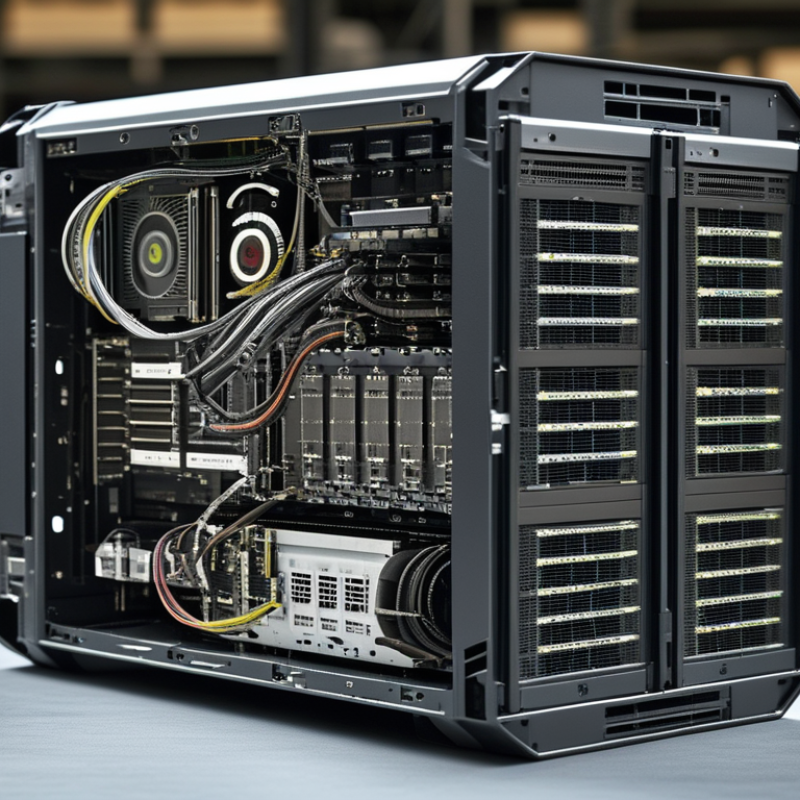
AI server manufacturing refers to designing, assembling, testing, and supporting servers built for artificial intelligence workloads. These systems typically combine advanced processors, high-speed memory, networking components, storage, and specialized cooling. Unlike general-purpose servers, AI servers must handle intensive model training, inference, and data processing. Their performance depends on the complete system, not one component alone.
The scope includes hardware engineering, power management, thermal design, firmware, quality testing, and lifecycle maintenance. It may also cover rack integration and customized configurations for research centers, enterprises, and public institutions. Reliable manufacturers document testing standards, component traceability, energy use, and service procedures. Field experience matters because unstable power delivery or poor airflow can reduce performance quickly. The boundary is not always clean. Some suppliers assemble systems, while others design nearly every part. This difference can affect reliability, delivery time, and technical support.
Tips: Compare complete system performance, not headline processing speed. Check cooling capacity, warranty terms, upgrade options, and repair response times. Ask for realistic workload results. A short demonstration can hide long-term weaknesses. Procurement teams should also verify supply continuity and local compliance requirements. Even careful assessments can miss future software changes. Rechecking assumptions is wise.
AI server manufacturing covers high-performance compute systems designed for model training and inference, including accelerators, server platforms, high-speed networking, storage, power delivery, and thermal management. The chart shows estimated global market revenue, with values rounded from public market research forecasts.
Market estimate: USD billions. Source: public AI server market research forecasts, including MarketsandMarkets projections for 2023–2028.
Modern AI servers rely on several tightly connected technologies. High-performance accelerators process training and inference workloads in parallel. High-bandwidth memory feeds these processors with large data streams. Small errors matter. Poor memory placement can reduce performance sharply.
Fast interconnects link accelerators inside one chassis and across multiple servers. Technologies such as PCIe, CXL, and RDMA reduce communication delays. Network adapters may support very high throughput for distributed model training. Storage systems use NVMe drives to load datasets quickly. In practical deployments, bandwidth often matters as much as raw computing power.
Thermal engineering is equally important. Direct-to-chip liquid cooling removes heat more efficiently than traditional air cooling. Sensors monitor processor temperature, power use, fan speed, and coolant flow. A management controller can detect faults before they stop production. Secure boot, hardware encryption, and trusted platform modules protect firmware and model data. These safeguards need regular testing, not just installation.
Manufacturers also design modular server boards, redundant power systems, and serviceable cable layouts. These details shorten maintenance time in crowded data centers. However, thermal models can miss sudden workload spikes. Power estimates may also look optimistic under sustained training. Engineers should validate every design with real workloads, noisy environments, and repeated stress tests. A technically impressive server can still waste energy if its software scheduling remains weak.
Top 10 AI Server Manufacturing Companies Worldwide?
Criteria for Ranking the Top 10 Global Manufacturers
Ranking global AI server manufacturers requires more than comparing shipment numbers. Our evaluation examines verified production capacity, system reliability, engineering expertise, and long-term customer support. Evidence matters more than publicity. We review audited reports, independent testing, data center deployments, and documented service records where available.
Technical performance carries significant weight. We assess accelerator compatibility, memory bandwidth, cooling design, power efficiency, and network scalability. A strong manufacturer should support dense computing without creating excessive heat or unstable power demand. Manufacturing quality also matters. We examine component traceability, factory controls, testing procedures, and defect management. These details often separate a dependable platform from an impressive specification sheet.
Commercial strength forms another ranking layer. We consider delivery consistency, regional service coverage, customization ability, warranty terms, and supply chain resilience. Cybersecurity practices and compliance with recognized international standards are also reviewed. Sustainability receives practical attention, including energy monitoring and repairability. Public information is uneven, however. Some manufacturers disclose detailed performance data, while others provide limited evidence. Therefore, the ranking uses transparent scoring but still includes judgment. Results may change as new testing, deployments, and production data become available.
The leading AI server manufacturers differ in scale, engineering focus, and regional reach. The first specializes in dense accelerator systems for language models and scientific computing. The second builds flexible rack platforms, supporting both air and liquid cooling. A third focuses on high-volume production, using standardized designs for cloud operators. Its strength is consistency, not flashy customization. The fourth develops compact servers for universities, laboratories, and smaller data centers.
The fifth manufacturer is known for advanced motherboard engineering and fast component integration. The sixth emphasizes energy efficiency, reducing heat through direct liquid-cooling designs. This matters when racks run continuously. The seventh serves telecommunications and edge-computing markets, where space and maintenance access are limited. The eighth combines server assembly with networking expertise, helping customers connect accelerators at high bandwidth. Performance depends on the entire system, not only the processor.
The ninth manufacturer targets enterprise buyers with longer validation cycles, detailed service contracts, and strict quality testing. The tenth supports regional data centers with configurable systems and practical after-sales assistance. Its advantage may be availability rather than maximum benchmark speed. Buyers should examine power consumption, warranty response, firmware support, and supply stability before choosing a supplier. Public rankings can be imperfect because production volume, design ownership, and contract manufacturing are often mixed together. A technically strong company may still struggle with delivery delays or limited field support. Real evaluation requires testing workloads under sustained heat, not relying on short demonstrations.
AI server manufacturing is entering a more regional and specialized phase. Demand is rising across North America, Europe, and Asia-Pacific. Cloud providers, research institutes, and financial firms need faster computing systems for demanding workloads. These systems require advanced accelerators, high-bandwidth memory, and reliable cooling. Production is no longer judged by processor speed alone.
Manufacturers are expanding assembly capacity near major data center markets. This reduces shipping delays and improves technical support. It also helps customers meet local sourcing and data governance requirements.
Liquid cooling is becoming more practical for dense server racks. Energy efficiency now influences purchasing decisions as strongly as performance. Small design gains can lower operating costs across thousands of machines.
The next market shift may involve modular production. Standardized server blocks can be installed, repaired, and upgraded more quickly. However, supply forecasts remain uncertain. Memory shortages, skilled labor gaps, and grid limitations may slow expansion. No ranking stays perfect. A company leading in volume may trail in customization or lifecycle support. Buyers should examine testing records, warranty terms, repair access, and power efficiency before signing large contracts. Future leaders will likely combine manufacturing discipline with flexible engineering, not simply produce more units.
I servers?
High-bandwidth memory keeps processors supplied with data. Poor memory placement may sharply reduce performance. Raw computing power is not everything.
PCIe, CXL, and RDMA connect accelerators and servers. High-throughput network adapters support distributed training. Communication delays can slow the entire system.
Direct-to-chip liquid cooling removes heat efficiently. Sensors track temperature, power, fan speed, and coolant flow. Heat problems can appear suddenly.
Secure boot, hardware encryption, and trusted platform modules protect firmware and model data. These controls require regular testing. Installation alone is not enough.
Evaluation should examine production capacity, reliability, engineering quality, and customer support. Useful evidence includes audits, independent tests, deployments, and service records. Publicity is weaker evidence.
Buyers should compare memory bandwidth, cooling, power efficiency, networking, and storage speed. A server may perform well briefly but struggle under sustained training. Long tests reveal more.
Production data, field testing, deliveries, and service records may change over time. Public information is also uneven. The ranking has blind spots.
Modular boards, redundant power, and accessible cable layouts can shorten repairs. This matters in crowded racks with limited working space. Availability may beat peak benchmark speed.
Check workload performance, power use, warranty response, firmware support, delivery stability, and regional service. Test systems with real workloads and repeated heat cycles. Short demonstrations can mislead.
AI server manufacturing refers to the design, assembly, testing, and delivery of high-performance computing systems built for artificial intelligence workloads. These servers combine advanced processors, accelerators, high-speed memory, specialized networking, efficient storage, and sophisticated cooling technologies to support model training, inference, analytics, and other data-intensive applications. This overview explains the main technologies shaping modern systems and establishes ranking criteria such as engineering capability, production scale, reliability, customization, energy efficiency, global service, and research investment.
The profiles of the top 10 global manufacturers highlight how each ai server manufacturing company approaches innovation, supply-chain management, quality control, and customer requirements. The discussion also considers regional markets, data-center expansion, cloud infrastructure, edge computing, and the growing demand for sustainable power and thermal management. Looking ahead, AI server production is expected to become more modular, efficient, secure, and adaptable as organizations seek faster performance while controlling operating costs and environmental impact.
