Velorix
Cloud AI servers now support model training, real-time inference, data analytics, and demanding enterprise workloads. Behind these systems are specialized manufacturers that combine high-density computing, advanced cooling, networking, and reliable software integration. This article examines the top 10 cloud AI server manufacturers shaping this competitive market.
The ranking considers more than processor speed. It looks at GPU and accelerator support, rack-scale design, energy efficiency, security features, supply-chain capability, and service quality. These details matter when a data center runs thousands of servers around the clock. A strong cloud ai server manufacturer must also manage heat, power demand, firmware updates, and long-term maintenance. Small design choices can affect operating costs significantly.
Market leadership is not always simple. Some manufacturers excel in custom hyperscale systems, while others focus on flexible enterprise platforms. A company may offer impressive benchmarks yet provide limited regional support. Another may deliver dependable hardware but lag in software optimization. That distinction deserves attention. Real-world performance can differ from laboratory results.
This overview draws on publicly available technical information, industry deployments, product specifications, and practical infrastructure considerations. It does not treat a single benchmark as final evidence. Readers should verify current configurations, warranty terms, certifications, and regional availability before making purchasing decisions. The industry changes quickly, and rankings can become outdated within months. That uncertainty is important. The following list offers a structured starting point for understanding which manufacturers currently influence cloud AI infrastructure and why their products remain relevant.
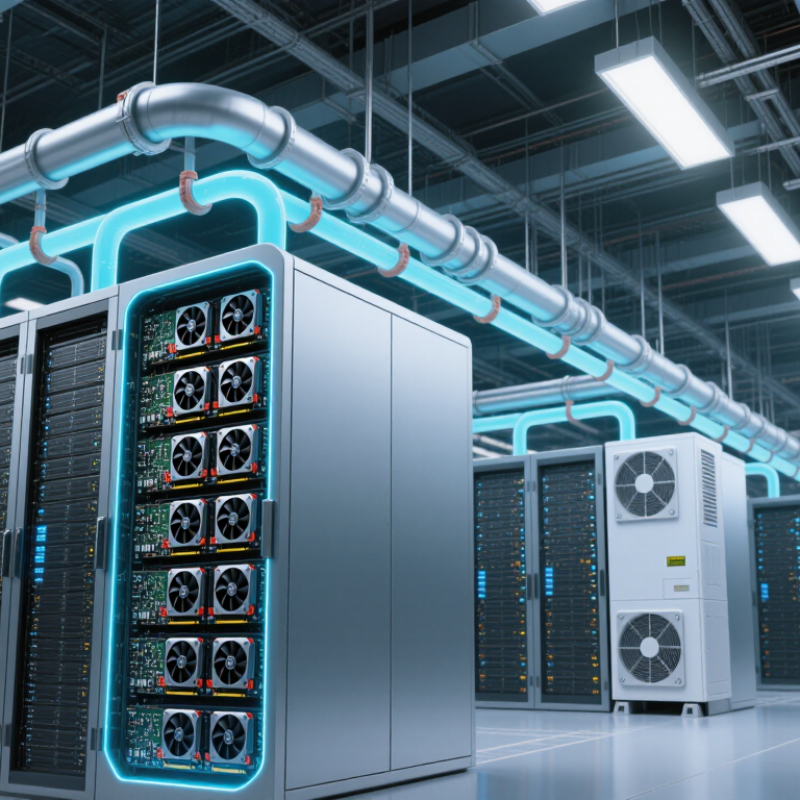
A cloud AI server manufacturer is more than a company that assembles racks. It designs and validates systems for sustained, high-density computing. That means integrating accelerators, memory, fast interconnects, storage, power delivery, and cooling so they work reliably as one platform. The work shows in practical details: balanced airflow, serviceable cabling, stable firmware, and predictable performance under long training runs. A specification sheet alone proves little.
The market makes these capabilities consequential. IDC’s 2024 Worldwide AI and Generative AI Spending Guide projected global AI spending would reach $632 billion by 2028. The International Energy Agency reported that data centers used about 415 terawatt-hours of electricity in 2024, and projected demand could exceed 945 terawatt-hours by 2030. These figures explain why credible manufacturers must demonstrate more than peak compute: they should document workload benchmarks, power use, thermal behavior, component traceability, and support across deployment and maintenance.
Evidence matters. Look for repeatable test results, clear configuration limits, and realistic service commitments—not just impressive accelerator counts. A strong manufacturer also helps operators plan rack power and cooling before equipment arrives. This boundary is imperfect: some suppliers design platforms, while others integrate and validate components. Buyers should ask who owns system-level testing and who resolves failures. That question is unglamorous, but useful.
Evaluating cloud AI server manufacturers requires more than comparing processor counts. Buyers should test complete systems on representative workloads, measuring completed training time, inference throughput, and performance per watt. Published peak figures can flatter a machine. Real jobs are less tidy. Reviewers should also check accelerator and software compatibility, memory capacity, storage speed, and network bandwidth; a fast server can still wait on data.
Power and cooling deserve equal weight. The International Energy Agency’s Energy and AI report estimates data centres used about 415 terawatt-hours of electricity in 2024, with demand potentially reaching about 945 terawatt-hours by 2030. That makes rack-level power draw, cooling requirements, and performance per watt practical evaluation criteria, not footnotes. Cooling is not optional. Reliability evidence matters too: inspect uptime records, component replacement procedures, supply lead times, warranty terms, and support coverage. Uptime Institute’s annual data-centre surveys provide useful context on operational risks, but no survey can predict every deployment. Numbers can mislead. A fair comparison combines published test methods with hands-on trials, and states where evidence is incomplete.
Who Are the Top 10 Cloud AI Server Manufacturers?
There is no single, reliable top-ten ranking of cloud AI server manufacturers. The leaders change as chip availability, system designs, and regional demand shift. A serious comparison should examine more than shipment volume. Look for proven experience building dense GPU systems, dependable support, and the ability to deliver complete racks—not just individual servers.
For a practical shortlist, compare ten capabilities: accelerator integration, rack-scale design, liquid cooling, high-speed networking, power efficiency, manufacturing capacity, customization, software compatibility, global service, and long-term parts availability. Ask for evidence. A detailed thermal report, a tested rack layout, and clear replacement timelines say more than broad performance claims. Listen for how a supplier handles a failed cooling pump at 2 a.m. That detail matters.
Fit matters most. A research team running small experiments may not need the same infrastructure as a cloud provider serving thousands of users. Request reference deployments with workloads similar to yours, and check whether quoted performance includes realistic networking and power limits. Rankings can help start a search, but they can hide important differences. Even a careful shortlist is imperfect. Inspect the hardware, question the assumptions, and verify support commitments before choosing.
Cloud AI servers behave differently across training, inference, and data-heavy workloads. Large-model training rewards high-bandwidth links between accelerators, ample memory, and reliable checkpoint recovery. Inference needs low latency and efficient processing at changing batch sizes. Recommendation and retrieval systems also depend on balanced CPU, memory, and storage. Small batches tell a different story. Stanford’s 2025 AI Index reports that inference costs for comparable language-model performance fell more than 280-fold, from $20 to $0.07 per million tokens, between November 2022 and October 2024. That makes tokens per watt and real utilization as important as peak throughput.
Power and cooling can overturn a paper win. The International Energy Agency’s Energy and AI report estimates data centers used about 415 TWh in 2024, roughly 1.5% of global electricity. It projects consumption could reach around 945 TWh by 2030. Compare systems using the same model, precision, batch size, and power limit. Track throughput, p95 latency, memory headroom, and energy per completed task. Benchmark charts rarely capture messy cluster traffic. Include failure recovery and realistic utilization, too; a single best-case score still leaves room for doubt.
| Representative Manufacturer | Typical Accelerator Configuration | Host and Memory Profile | Interconnect and Networking | Strongest Workload Fit | Key Trade-Off |
|---|---|---|---|---|---|
| Manufacturer 1 | 4–8 accelerators per server | Dual-socket server; high-capacity system memory; accelerator memory commonly based on HBM | High-bandwidth accelerator fabric; 200–400 Gb/s-class cluster networking | Model fine-tuning, medium-scale training, and inference | Balanced platform, but large training jobs may need many servers |
| Manufacturer 2 | 8 accelerators per server | Dual-socket host; high memory capacity and bandwidth | Direct accelerator-to-accelerator links; 400 Gb/s-class cluster networking | Distributed training and high-throughput inference | High performance depends on careful cluster and cooling design |
| Manufacturer 3 | 8–16 accelerators per server or rack-scale system | High-density host configuration; large system-memory capacity | Scale-up fabric within the system; high-speed Ethernet or InfiniBand for scale-out | Large language model training and multi-node fine-tuning | Greater power, cooling, and facility requirements |
| Manufacturer 4 | 4–8 accelerators per server | Dual-socket x86 or Arm host options; expandable system memory | PCIe-based connectivity; optional high-speed accelerator fabric and cluster networking | Inference, computer vision, and general-purpose AI workloads | Configuration flexibility can make performance less consistent between systems |
| Manufacturer 5 | 8 accelerators per server | High-memory host platform designed for data-intensive workloads | High-bandwidth internal links; 200–400 Gb/s-class network options | Recommendation systems, embedding workloads, and inference | Memory-heavy configurations can increase system cost and power use |
| Manufacturer 6 | 4–8 accelerators per server | Standard dual-socket design; multiple memory and storage configurations | PCIe Gen5-class expansion; Ethernet or InfiniBand cluster options | Enterprise inference, model development, and mixed workloads | May require additional tuning for tightly coupled, large-scale training |
| Manufacturer 7 | 8 accelerators per server; selected rack-scale options | High-bandwidth memory support; dense compute and storage options | Accelerator fabric for intra-node communication; high-speed cluster links | Training, simulation, and large-batch inference | Dense designs may require specialized rack power and liquid cooling |
| Manufacturer 8 | 2–8 accelerators per server | Flexible single- or dual-socket hosts; broad system-memory choices | PCIe-based connectivity; network options vary by deployment | Edge-to-cloud inference, development, and smaller training jobs | Smaller configurations are less efficient for very large distributed training |
| Manufacturer 9 | 8–16 accelerators in high-density systems | Large host-memory capacity; chassis designed for sustained compute loads | High-bandwidth internal fabric; 400 Gb/s-class or faster cluster networking | Large-scale training and high-throughput generative AI services | Requires strong network, power, and thermal planning at cluster level |
| Manufacturer 10 | 4–8 accelerators per server | Configurable host memory, storage, and CPU options | PCIe Gen5-class expansion; optional high-speed fabric and cluster networking | Mixed AI and HPC workloads, fine-tuning, and inference | Actual workload performance depends strongly on accelerator and software selection |
Reading the comparison: Manufacturer labels are anonymized and do not imply a ranking. Entries summarize common cloud AI server design classes rather than verified specifications for any particular supplier. Available accelerator counts, memory, networking, and cooling vary by model and configuration; workload performance also depends on software, model size, precision, and cluster topology.
What Trends Are Shaping Cloud AI Server Manufacturing?
Cloud AI server manufacturing is moving toward denser, more specialized systems. Training and inference workloads need powerful accelerators, fast memory, and high-speed connections between components. As a result, manufacturers are designing complete rack-scale systems, not just individual servers. That changes factory work. Technicians must validate cooling, cabling, and power delivery across a tightly packed rack.
Power is becoming a design constraint. The International Energy Agency’s Electricity 2024 report estimated data centers used about 460 TWh globally in 2022, with demand potentially exceeding 1,000 TWh by 2026. This pressure is encouraging liquid-cooling designs and more efficient power distribution. Yet adoption varies by facility; liquid cooling is not a simple drop-in replacement.
Demand forecasts add urgency, but need context. IDC’s Worldwide AI and Generative AI Spending Guide projected global AI spending would reach about $632 billion by 2028, including hardware, software, and services. That figure is not a server-sales forecast. Still, it signals why manufacturers are expanding capacity while seeking flexible designs that can support changing workloads. One uncomfortable caveat: forecasts can shift faster than factories can. Server makers must balance rapid production with testing, repairability, and energy efficiency. That balance remains imperfect.
Growing data-center electricity demand is pushing manufacturers toward higher-density server designs, more efficient power systems, and advanced cooling. The 2026 figures are an estimated range, not a single-point forecast.
Source: International Energy Agency (IEA), Electricity 2024. Global data-center electricity consumption: approximately 460 TWh in 2022; projected range of 620–1,050 TWh in 2026.
No. Rankings change with accelerator supply, system designs, and regional demand. A shortlist is useful, but never final.
Check dense accelerator experience, rack-scale design, cooling, networking, service, and parts availability. Large shipments do not guarantee dependable support.
AI workloads need tightly connected accelerators, fast memory, and high-speed networking. Manufacturers now validate power, cabling, and cooling across entire racks.
Liquid cooling can manage high heat in dense racks. It is not a simple replacement. Facilities may need new pipes, pumps, and maintenance procedures.
Request thermal reports, tested rack layouts, realistic power figures, and replacement timelines. Ask how a failed cooling pump is handled overnight.
Usually not. Small teams may need flexible, smaller installations. Large providers require higher capacity, stronger networking, and wider service coverage.
Request reference deployments using similar workloads. Confirm that performance includes networking limits, power restrictions, cooling conditions, and practical software compatibility.
Demand may rise faster than factories can test, repair, and deliver systems. Forecasts can change. That uncomfortable gap deserves careful planning.
Dense AI systems are difficult to replace quickly. Clear access to pumps, power components, and accelerator-related parts can reduce lengthy downtime.
Trusting broad performance claims without inspecting assumptions. Look closely. Support promises should be tested, not merely repeated.
A cloud ai server manufacturer designs and builds systems that combine high-performance processors, accelerators, memory, networking, and cooling to support AI services in cloud environments. This overview explains how manufacturers can be evaluated, including computing performance, scalability, energy efficiency, reliability, compatibility, and support. It also introduces ten leading categories of providers without focusing on brand names, helping readers understand the range of capabilities available in the market.
Different server designs suit different AI workloads: model training may require dense accelerator configurations and fast interconnects, while inference often prioritizes efficient operation, low latency, and flexible deployment. The comparison highlights how system architecture affects these needs. It also considers trends shaping manufacturing, such as rising demand for specialized hardware, improved cooling, greater power efficiency, and modular designs that can adapt as AI workloads evolve.
