Velorix Velorix

What Is an Industrial AI Server Manufacturer?

Time:2026-09-16 Author:Isabella
0%

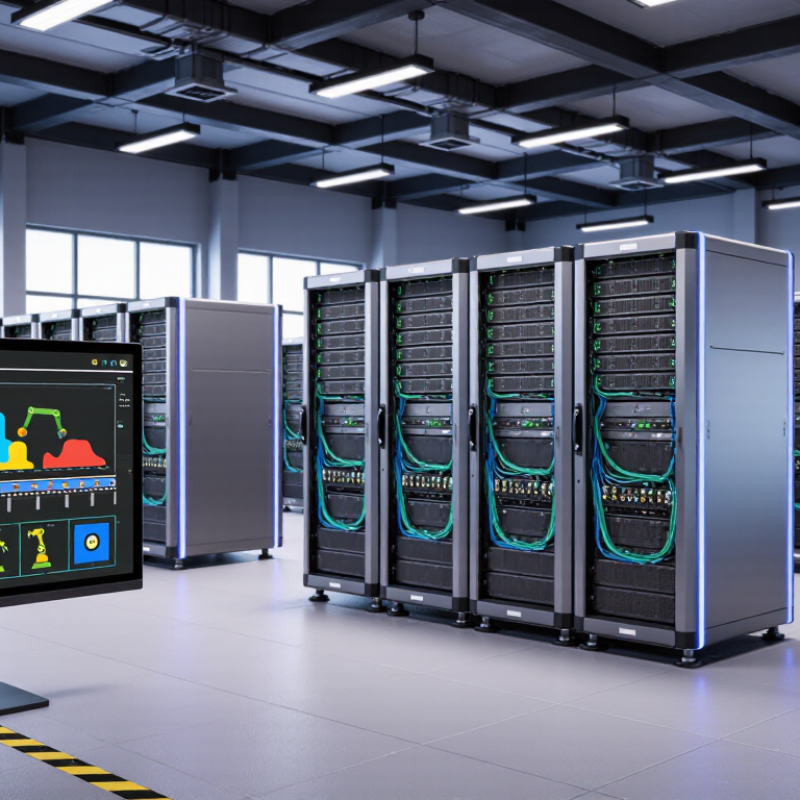
An industrial AI server manufacturer builds computing systems for demanding factory, energy, transport, and infrastructure environments. These systems do more than host powerful processors. They must process camera feeds, sensor readings, digital twins, and production data with predictable speed. A reliable industrial AI server manufacturer also considers heat, vibration, dust, network interruptions, and long operating cycles.

Jensen Huang, founder and CEO of NVIDIA, has said, “The future of computing is accelerated computing.” This statement helps explain the industry’s direction. Modern servers often combine GPUs, CPUs, high-speed memory, and specialized networking. A factory may use them to detect surface defects within milliseconds. A logistics center may analyze hundreds of camera streams near the loading dock. Small delays can become expensive operational problems.

However, the label can be misleading. Not every AI server is truly industrial. A glossy specification sheet does not prove field reliability. Buyers should examine thermal design, remote management, component lifecycle support, cybersecurity practices, warranty response, and compatibility with existing control systems. Evidence matters more than promises.

A strong industrial AI server manufacturer connects hardware engineering with real operational experience. Its team understands rack airflow, power limits, inference workloads, and maintenance access. It should also explain performance using measured workloads, not only theoretical benchmarks. This definition remains imperfect. Industrial sites differ widely, and one standard configuration rarely fits every plant. Still, careful evaluation can reveal whether a supplier offers a durable production tool or simply a powerful computer.
What Is an Industrial AI Server Manufacturer?

Definition and Scope of an Industrial AI Server Manufacturer

An industrial AI server manufacturer designs and produces computing systems for demanding factory and infrastructure environments. Its work extends beyond assembling processors, memory, storage, and accelerators. It must match hardware with real operating conditions, including heat, dust, vibration, restricted space, and unstable network access. This scope makes industrial AI servers different from standard data center machines.

The manufacturer typically handles platform engineering, thermal design, power planning, firmware integration, and system validation. It may configure high-speed networking, rugged storage, remote monitoring, and redundancy for continuous operations. Engineers should test workloads such as visual inspection, predictive maintenance, robotics control, and sensor analysis. A useful design survives long shifts, not only a short laboratory benchmark. Small details matter. Cable routing matters.

The scope also includes deployment guidance, documentation, maintenance, and lifecycle support. Reliable manufacturers explain performance limits instead of promising unlimited capacity. They should provide clear test conditions, service procedures, security controls, and evidence of compliance with applicable technical requirements. However, the boundary is not always clean. Some manufacturers build every major component, while others integrate certified parts from different suppliers. That model can reduce development time, but it may complicate accountability. No industrial server is perfect. A responsible manufacturer admits trade-offs and helps customers choose between processing power, energy use, physical durability, and long-term serviceability.

Core Technologies Used in Industrial AI Server Manufacturing

What Is an Industrial AI Server Manufacturer?

Core Technologies Used in Industrial AI Server Manufacturing

An industrial AI server manufacturer builds computing systems for factories, energy sites, transport hubs, and other demanding environments. These systems must process sensor, camera, and machine data with minimal delay. Reliability matters more than attractive specifications.

Modern designs combine GPUs, AI accelerators, high-speed memory, and low-latency networking. Thermal engineering is equally important. Liquid cooling can remove heat more efficiently than conventional fans, especially in dense racks. According to the International Energy Agency’s Energy and AI report, data centers consumed about 415 TWh of electricity in 2024. Demand could reach nearly 945 TWh by 2030. Efficient power supplies and intelligent workload control are no longer optional.

Industrial servers also need shock-resistant enclosures, extended temperature support, redundant storage, and secure boot protection. Edge computing reduces the need to send every image or signal to a remote cloud. This can improve response time and reduce bandwidth costs. However, edge hardware is not automatically safer. Poor patch management still creates avoidable risks. The design is never perfect.

Tips: Test servers with real factory dust, vibration, heat, and network interruptions. Review results against published standards, not only laboratory demonstrations. The IEEE and IEC provide useful frameworks for reliability, safety, and industrial communication. Keep human oversight in the loop, especially when AI influences maintenance or production decisions.

Key Industries and Applications for Industrial AI Servers

Industrial AI Server Manufacturer: Key Industries and Applications

An industrial AI server manufacturer designs computing systems for harsh, data-heavy environments. These servers support factories, energy sites, transport networks, hospitals, and farms. Unlike ordinary office hardware, they may operate beside vibrating machines, dusty conveyors, or unstable temperatures. Their applications include visual inspection, predictive maintenance, robotic coordination, medical image analysis, traffic monitoring, and crop disease detection. A reliable manufacturer should explain processor choices, cooling methods, storage endurance, and long-term support. Performance numbers alone are not enough.

In manufacturing, edge AI servers can inspect welds and packaging within seconds. They reduce delays because data stays near the production line. Energy operators use them to detect abnormal turbine sounds or forecast equipment failure. Logistics teams apply AI to monitor vehicle movement and warehouse safety zones. Hospitals need controlled access, accurate processing, and dependable uptime. Agricultural systems analyze camera feeds from greenhouses and fields. These use cases differ greatly. A server designed for a clean data center may fail in a hot, dusty workshop. That mistake is common.

Tips: Match the server to its location, workload, and maintenance capacity. Check operating temperature, expansion options, remote management, and backup plans. Test real data before large deployment. A perfect system is rare. Teams may also overestimate AI accuracy when lighting, sensor quality, or labeling changes. Regular validation remains necessary, even after installation.

Manufacturing Process and Quality Requirements

An industrial AI server manufacturer builds more than a powerful computer. It creates a reliable system for factories, transport networks, energy sites, and other demanding environments.

Manufacturing begins with verified components, controlled assembly, and clear production records. Engineers inspect processors, memory, storage devices, power units, and cooling modules before installation. Every critical part should have traceable batch information.

Thermal management is central to server quality. Technicians test airflow, fan performance, heat dissipation, and temperature stability under continuous workloads. They also check vibration resistance, cable security, grounding, and enclosure strength. Firmware and system software require controlled version management. A small configuration error can reduce performance or interrupt an industrial process. Burn-in testing helps reveal unstable memory, weak connections, or early hardware failures. Still, no factory process is perfect. A complete checklist may miss an unusual field condition.

Tips: Ask for test records, calibration dates, and failure-handling procedures. Confirm whether the manufacturer performs load testing at realistic temperatures. Review warranty terms and repair response times. Quality should be measurable, not merely promised. Factory acceptance tests should match the server’s intended workload. Independent inspection can add confidence when deployment risks are high. Even experienced teams sometimes underestimate dust exposure or sudden power changes. That mistake deserves review.

How to Evaluate an Industrial AI Server Manufacturer

What Is an Industrial AI Server Manufacturer?

How to Evaluate an Industrial AI Server Manufacturer

An industrial AI server manufacturer builds computing systems for demanding factory, energy, transportation, and laboratory environments. Evaluation should begin with your workload, not a glossy product sheet. Identify model size, inference speed, camera inputs, storage needs, and operating temperature. A server that performs well in a showroom may struggle beside a dusty production line.

Ask for measured results under realistic conditions. Request thermal data, power consumption, vibration testing, and noise levels. Check whether the manufacturer supports suitable accelerators, redundant power supplies, remote monitoring, and secure firmware updates. Clear documentation matters. So does traceability for critical components. Certifications can support credibility, but they should match your region and application.

A reliable manufacturer should provide a pilot unit or controlled validation plan. Test it with your own models, network limits, and maintenance team. Review warranty terms, repair procedures, spare-part availability, and expected product life. Ask how software updates are managed after deployment. In practice, support response times can matter more than a small performance advantage.

Do not trust perfect projections.

A low purchase price may hide cooling, integration, and downtime costs. A powerful server may also be excessive for a simple inspection task. I would record every assumption, then challenge it with measured data. That step feels slow, yet it often exposes weak thermal design or unclear service commitments before installation. Look for evidence, not confidence.

FAQS

What is an industrial AI server?

It is a computing system built for harsh, data-heavy environments. It can operate near vibration, dust, heat, and changing temperatures. Office hardware may struggle there.

Which industries use industrial AI servers?

Manufacturing, energy, transport, healthcare, logistics, and agriculture use them. Factories inspect welds and packaging. Energy sites monitor turbines. Farms analyze greenhouse and field images.

What tasks can these servers perform?

They support visual inspection, predictive maintenance, robotic coordination, and traffic monitoring. They also process medical images and detect crop diseases. Applications differ widely.

Why is edge processing useful in factories?

Edge servers process data close to production equipment. This can reduce delays and limit dependence on distant systems. A camera may identify a packaging defect within seconds.

How should a server match its installation location?

Check operating temperature, dust exposure, vibration, airflow, and available maintenance. A clean-room system may fail beside a hot, dusty conveyor. That mistake is common.

What quality tests should an industrial server receive?

Testing should cover airflow, fan performance, heat dissipation, vibration resistance, and temperature stability. Technicians should also check cable security, grounding, and enclosure strength. Burn-in testing can expose unstable memory and weak connections.

Why are component records and software controls important?

Processors, memory, storage, power units, and cooling modules should have traceable batch information. Controlled firmware versions help prevent configuration problems. A small software error can interrupt an industrial process.

How can teams reduce deployment risks?

Test real data before large deployment. Review backup plans, remote management, expansion options, warranty terms, and repair response times. Validate accuracy regularly when lighting, sensors, or labels change. No checklist catches everything.

Conclusion

An industrial ai server manufacturer designs and produces computing systems built to support demanding industrial environments, where reliability, real-time performance, and long-term stability are essential. These manufacturers combine high-performance processors, accelerators, advanced cooling systems, ruggedized enclosures, secure networking, and intelligent software integration to enable artificial intelligence at the edge or in centralized facilities. Their solutions can serve sectors such as smart manufacturing, energy, transportation, healthcare, logistics, and infrastructure by supporting machine vision, predictive maintenance, automation, data analysis, and operational monitoring.

The manufacturing process typically includes system architecture design, component selection, assembly, firmware and software configuration, thermal testing, performance verification, and quality inspection. Because industrial servers may operate continuously in challenging conditions, manufacturers must emphasize durability, cybersecurity, power efficiency, scalability, and compliance with relevant technical standards. When evaluating an industrial ai server manufacturer, buyers should consider engineering expertise, customization capabilities, lifecycle support, testing procedures, delivery reliability, maintenance services, and the ability to provide stable performance as computing requirements evolve.

Isabella

Isabella

Isabella is a dedicated marketing professional with a sharp focus on driving brand growth and engagement through strategic content creation. With an extensive background in digital marketing, she combines her passion for storytelling with her keen understanding of industry trends to deliver......